
Japanese Chef Knife Reviews That Help You Buy
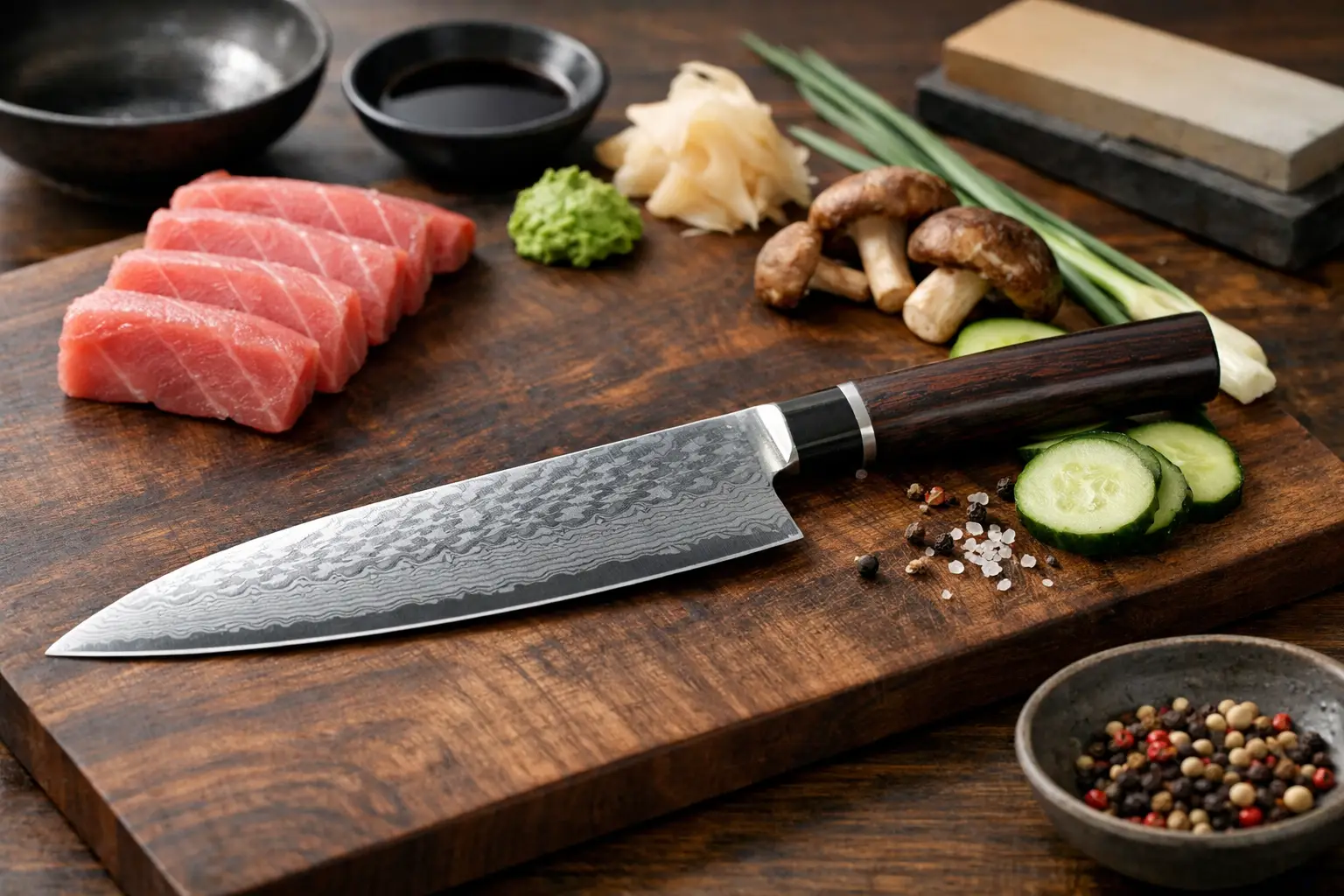
A knife can feel impressive in a product photo and still disappoint the moment it hits an onion. That is why japanese chef knife reviews matter most when they answer a simple question: how does the knife actually perform in a home kitchen, day after day?
For most home cooks, the appeal of a Japanese-style chef knife is immediate. It feels lighter than the bulky Western knives many people start with. It glides rather than wedges. It makes prep feel cleaner, faster, and oddly more satisfying. But reviews can be noisy. Some obsess over steel charts. Others focus on looks alone. The better approach is to judge a knife the way you cook with it - by comfort, control, edge retention, and whether it makes ordinary meals easier to make well.
What good japanese chef knife reviews actually tell you
A useful review does more than call a knife sharp. Almost any decent knife feels sharp out of the box. The real test is what happens after a few weeks of chopping herbs, slicing proteins, and working through hard produce like carrots or squash.
The best reviews pay attention to balance first. A well-balanced Japanese knife should feel precise, not heavy-handed. You should not have to fight the blade through prep. The tip should feel responsive, and the handle should keep the knife secure without forcing your grip into an awkward position.
Edge retention matters just as much. A knife that starts razor-sharp but loses its bite quickly becomes frustrating. This is where Japanese steels often stand apart. Better steel, properly heat treated, can hold a finer edge longer. That does not mean every hard steel knife is automatically better. Harder blades usually reward proper technique, but they can be less forgiving if used carelessly on bones, frozen food, or glass cutting boards.
A strong review also covers cutting feel. This is harder to measure, but easy to notice. Some knives move through food with very little resistance. Others feel sticky on potatoes or drag through dense vegetables. Thin geometry often improves cutting performance, but if a blade is too delicate for the way you cook, that same thinness can feel risky rather than refined.
The review criteria that matter in a real kitchen
If you are moving up from a standard knife block set, four things deserve most of your attention.
Sharpness is first, but not in the dramatic sense people love on social media. What matters is controlled sharpness. Can the knife start a tomato skin cleanly without crushing it? Can it mince herbs without bruising them? Can it portion chicken neatly instead of tearing through it?
Weight is next. Japanese-style blades are often lighter than German or French chef knives, and that changes the experience more than many buyers expect. A lighter knife can reduce fatigue and improve agility, especially during longer prep sessions. Still, some cooks prefer a little more substance in hand. It depends on whether you want nimbleness or a more anchored, traditional feel.
Handle design is often overlooked in reviews, yet it shapes comfort every time you cook. Western-style handles usually feel familiar and stable, while wa-style Japanese handles often feel lighter and shift the balance slightly forward toward the blade. Neither is universally better. The right choice comes down to grip preference and how much adaptation you want.
Then there is maintenance. This is where honest reviews become especially helpful. A knife made from high-performance steel may hold an edge beautifully, but it still needs sensible care. Hand washing, prompt drying, and proper storage are part of the package. If a review acts as though a premium knife can be treated like an inexpensive beater blade, it is not really reviewing the knife fairly.
Japanese chef knife reviews by knife type
Not every great Japanese knife is a Gyuto, even if that is the format most shoppers start with.
Gyuto
The Gyuto is the closest Japanese answer to the Western chef knife, and for many people it is the best place to begin. Reviews tend to rate it highly for versatility because it can handle proteins, vegetables, herbs, and general prep without specializing too narrowly. If you want one knife to do nearly everything, this is usually the safest bet.
The trade-off is that a Gyuto asks for a bit of technique. It is not difficult to use, but it rewards cleaner cutting habits. For home cooks ready to upgrade, that is usually a benefit rather than a drawback.
Santoku
Santoku reviews often emphasize ease and comfort. Its shorter blade and flatter profile make it approachable, especially in smaller kitchens or for cooks who feel intimidated by a full-length chef knife. It excels at everyday slicing, dicing, and chopping.
The main limitation is reach. If you regularly break down large produce or prefer the extra length of a classic chef knife, a Santoku may feel slightly compact. For many households, though, that compactness is exactly the point.
Nakiri
A Nakiri earns glowing reviews from vegetable-focused cooks for good reason. Its straight edge makes full contact with the board, which helps with fast, clean vegetable prep. If your cooking leans heavily toward stir-fries, salads, soups, and plant-forward meals, it can be a joy to use.
It is less of an all-rounder, though. You can use it broadly, but it shines brightest on produce. Reviews that frame it as a universal replacement for every other knife can be a little too optimistic.
Bunka and Kiritsuke-style knives
These tend to attract buyers who want something with a bit more edge in both appearance and performance. The angular tips are useful for detailed work, and the profiles often feel agile and modern. Reviews usually praise them for precision and style.
They are a stronger fit for engaged home cooks than total beginners. Not because they are difficult, but because they are more specific in character. If you enjoy technique and want a knife that feels distinctive, they can be a smart step up.
What reviews often miss about steel
Steel matters, but not in the way forums sometimes suggest. Most home cooks do not need to memorize steel families to choose well. What they need to know is how steel affects daily use.
A quality Japanese steel can support a harder, finer edge than many entry-level Western knives. That usually means cleaner cuts and longer edge retention. It can also mean a knife feels more precise because the blade geometry stays working-sharp for longer.
But harder steel comes with expectations. You should use the right cutting surface, avoid twisting through hard ingredients, and keep up with regular honing or sharpening when needed. If you want absolute low-maintenance convenience, there are softer and tougher knives that may suit you better. If you want a noticeable improvement in performance, Japanese steel starts making a lot of sense.
Damascus finishes deserve a quick reality check as well. They can look beautiful, and on a premium knife they often add to the sense of craftsmanship. But a patterned finish is not the reason a knife cuts well. Performance still comes down to steel quality, heat treatment, grind, balance, and fit in your hand.
How to read reviews like a smart buyer
The most reliable japanese chef knife reviews usually come from people who describe specific kitchen tasks. If someone explains how the knife handled onions, herbs, sweet potatoes, and chicken over time, that is far more useful than vague praise.
Look for signs that the reviewer understands trade-offs. A thoughtful review will say when a knife is wonderfully thin but better suited to careful use, or when a handle feels beautiful but may not suit every grip. That kind of detail is a good sign.
It also helps to notice who the knife is for. Some reviews are written by collectors or serious enthusiasts with very specific preferences. That perspective can be interesting, but if you are a home cook looking for a daily driver, your ideal knife may be the one that feels easiest to live with, not the one that wins the most technical arguments.
This is where an approachable brand perspective matters. Shimeru Knives, for example, speaks to home cooks who want sharper, better-balanced tools without needing to become knife specialists first. That kind of guidance is valuable because the right knife should make cooking feel more natural, not more intimidating.
The best review question is not which knife is best
It is which knife is best for the way you cook.
If you want one premium upgrade for all-purpose prep, a Gyuto is hard to beat. If you cook in a smaller space or want something immediately comfortable, a Santoku may suit you better. If vegetables dominate your meals, a Nakiri can feel like a revelation. And if aesthetics matter alongside performance, a Bunka or Kiritsuke-style knife may give you that sense of craft every time you reach for it.
A good knife review should leave you with clarity, not confusion. Sharper. Lighter. Better balanced. Those are not niche benefits reserved for restaurant cooks. They are the difference between a chore and a pleasure on an ordinary weeknight, and that is where the right knife earns its place.