
How to Clean Japanese Chef Knife Properly
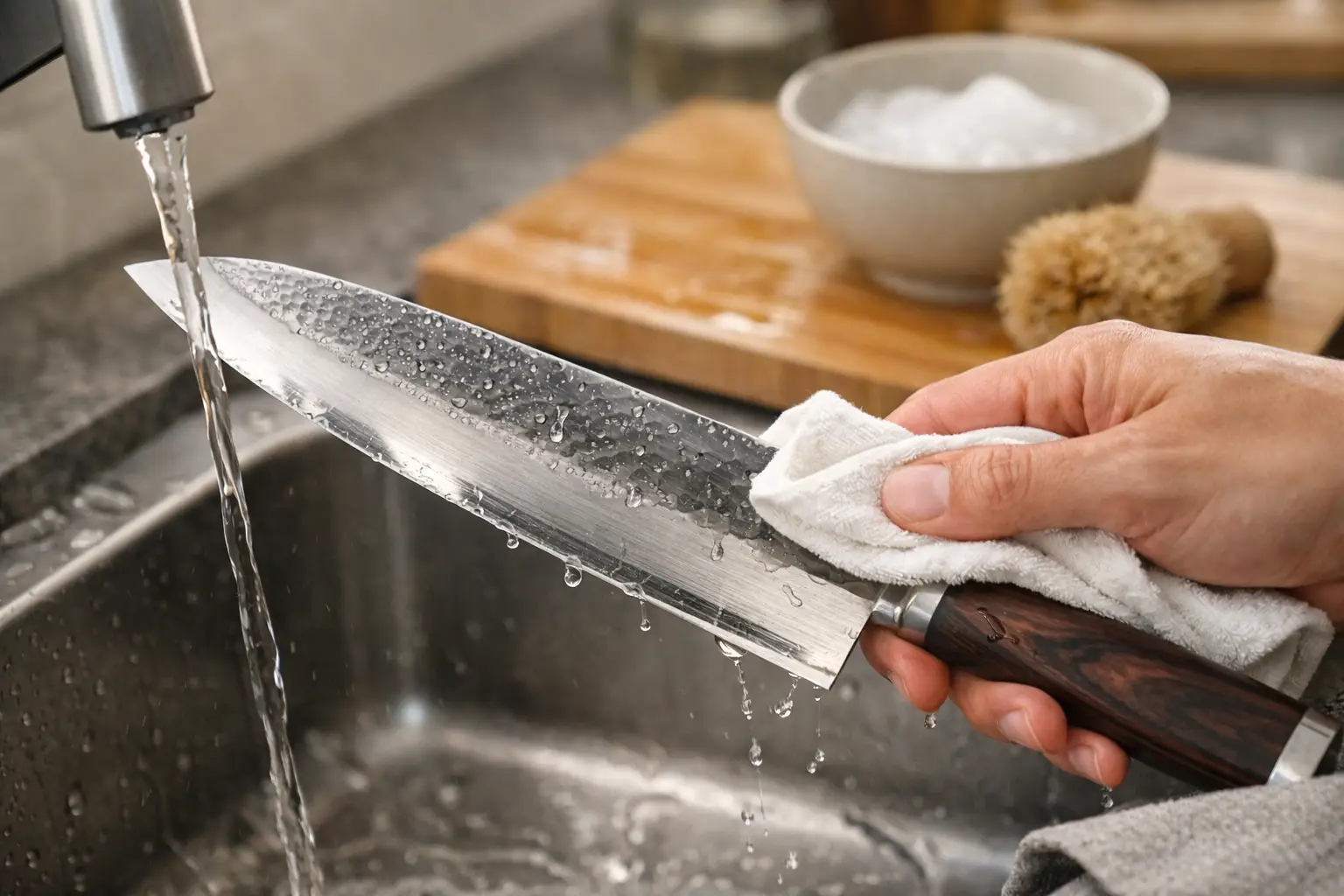
A Japanese chef knife should never sit in the sink. That one small habit causes more damage than most home cooks realize - water spots, edge wear, handle swelling, and, with some steels, the first signs of rust. If you are learning how to clean Japanese chef knife the right way, the goal is simple: protect the edge, protect the finish, and keep that crisp, precise feel that made you buy it in the first place.
Japanese knives reward good habits. They are lighter, sharper, and often ground thinner than many Western knives, which is a big part of why they feel so clean and efficient on the board. That same refinement also means care matters. The good news is that proper cleaning takes less than a minute.
How to clean Japanese chef knife after each use
The best method is also the easiest. Wash the knife by hand as soon as you finish prep, or at least immediately after cooking. Use warm water, a small amount of mild dish soap, and a soft sponge or dishcloth. Wipe from the spine toward the edge with care, rather than dragging your fingers along the blade.
Once clean, rinse off any soap and dry the knife completely with a soft towel. Not mostly dry. Completely dry. Pay attention to the area where the blade meets the handle, because moisture tends to collect there.
If you cut something especially acidic, like lemons, tomatoes, citrus, or onions, clean the blade a little faster than usual. Acid can encourage staining or reactivity, particularly on high-carbon steel. Even stainless Japanese steel benefits from quick attention.
That is the core routine. No soaking, no dishwasher, no harsh scrubbing, and no leaving it on a damp towel while you plate dinner.
What you should never do
A dishwasher is the fastest way to shorten the life of a fine Japanese knife. The heat, detergent, and constant knocking against other utensils can dull or chip a thin edge surprisingly quickly. Premium steel holds an edge well in cooking, but it is not meant to rattle around in a machine.
Soaking is another common mistake. A few minutes in water may not seem serious, but repeated soaking can damage wooden handles, loosen adhesives, and increase the chance of corrosion. If your knife has a traditional wa-style handle, this matters even more.
Avoid abrasive scrubbers, steel wool, or aggressive cleaners. They can scratch the blade finish and remove the refined look that gives Japanese knives much of their appeal. If food is stuck on, let a damp cloth rest on the spot briefly, then wipe it away gently.
It is also worth saying plainly: do not toss the knife into a sink full of dishes. That is bad for the edge and bad for your hands.
Stainless vs carbon steel: cleaning changes slightly
Not every Japanese chef knife should be treated exactly the same way. The broad routine is identical, but the speed and attention can vary depending on the steel.
Cleaning stainless Japanese knives
Most home cooks start with stainless or stainless-clad Japanese knives, and for good reason. They offer the sharpness and balance Japanese knives are known for, with less maintenance. If your knife uses steels like VG-10 or similar stainless alloys, hand washing and thorough drying are usually enough.
You still should not leave it wet, and you still should not put it in the dishwasher. Stainless means more stain resistant, not stain proof.
Cleaning carbon steel Japanese knives
Carbon steel is a little more demanding, but many cooks love it for the edge quality and sharpening feel. If you have a carbon steel blade, clean it immediately after use and dry it right away. Some owners also apply a very light coat of food-safe mineral oil if the knife will be stored for a while.
You may notice the blade darkening over time. That patina is normal. In many cases, it helps protect the steel. Orange rust is different - that should be removed promptly before it spreads.
If you are not sure what steel your knife uses, err on the careful side. Quick wash, quick dry, safe storage.
How to remove light rust or stains
A few spots do not automatically mean the knife is ruined. Light surface rust can often be handled at home if you catch it early.
Use a soft cloth, a gentle rust eraser, or a paste made from baking soda and water. Rub lightly only where needed, then rinse and dry the blade thoroughly. Keep pressure controlled. You want to remove the rust, not scratch up the finish more than necessary.
For stubborn discoloration, it depends on the blade finish and steel type. A polished blade will show marks more easily than a more textured finish. If the knife has a Damascus pattern or a kurouchi finish, aggressive cleaning can affect its appearance, so restraint matters.
If rust is deep, pitting is visible, or the edge itself looks damaged, professional sharpening or restoration is the better move. A fine knife is worth proper care.
The right way to dry and store it
Cleaning does not end at the sink. Storage is part of knife care, because a perfectly washed blade can still pick up damage afterward.
Dry the knife with a soft, absorbent towel, then store it somewhere the edge is protected and the blade stays dry. A saya, blade guard, magnetic strip, or knife block can all work well. The main thing is that the edge should not knock into hard surfaces.
A drawer is only safe if the knife has edge protection. Loose storage dulls blades, risks chips, and turns every reach into the drawer into a bad idea.
If you live in a humid climate, be even more attentive about drying. Moisture in the air can affect carbon steel over time, and even stainless blades stay looking better when stored dry and clean.
How often should you deep clean a Japanese chef knife?
For most home cooks, there is no separate deep-clean routine in the way there might be for cast iron or a coffee machine. The daily wash-and-dry method is the maintenance plan.
What does change occasionally is the need to remove residue, polish away fingerprints, or address a spot before it becomes rust. If your knife sees a lot of use, a quick inspection every week or two is smart. Look at the edge, the spine, and the area near the handle. Small issues are easy to fix early.
If the handle is wood, avoid saturating it. A light wipe is enough. Some wooden handles benefit from occasional conditioning with a food-safe oil, but only sparingly. Too much product can make the handle feel greasy rather than cared for.
Why proper cleaning protects sharpness
Most people think cleaning is about hygiene, and of course it is. But with Japanese knives, cleaning is also edge care.
A thin, hard edge stays sharp because the steel is engineered for precision. That same precision is vulnerable to careless treatment. Leaving food acids on the blade, letting water sit near the edge, or scraping at stuck bits with rough tools all work against the knife’s strengths.
This is where Japanese knives feel different from mass-market kitchen knives. They are not high maintenance, but they are responsive. Treat them well and they keep delivering that smooth, low-resistance cut through herbs, onions, proteins, and dense vegetables. Neglect them and the performance drop shows up fast.
For home cooks upgrading to their first serious blade, this is actually reassuring. Caring for a Japanese knife is not complicated. It is simply deliberate. That fits the whole appeal - better balance, cleaner cuts, and a tool that makes everyday cooking feel more exact.
A few signs your routine needs work
If your blade develops water spots, a metallic smell, rust freckles, or a rough feel near the edge, your cleaning routine probably needs to be quicker and more thorough. If the handle feels raised or dry in patches, excess moisture may be part of the problem.
And if the knife seems dull sooner than expected, cleaning may not be the only issue, but storage often plays a role. A well-made Japanese chef knife can hold an edge beautifully, yet it still needs protection between uses. Brands like Shimeru Knives design these blades for real kitchens, but even the best steel performs better when the basics are done right.
A good Japanese knife asks for one minute of attention and gives back years of precision. Wash it by hand, dry it fully, store it with care, and it will keep feeling like the best tool on your counter.